Ask ten retirees where the best place in Thailand is and you will get ten different answers, each one certain. The truth is plainer: there is no best town. There is only the town that fits the life you actually want to live, at the price you can actually pay, with a hospital you actually trust.
We live between two bases ourselves — Surin, our home in Isan, and Phuket, where we work — so we have felt both ends of this choice. Yesterday we walked through the retirement visa. The day before, we broke down what a month here really costs. Today is the question underneath both of those: where do you put yourself?
Here is the honest rundown, town by town.
Phuket: beaches and infrastructure, at island prices
Phuket is the easy version of Thailand. International airport with flights everywhere. Big private hospitals. Supermarkets selling the cheese and wine you thought you would have to give up. Beaches in every direction, golf, marinas, and the biggest expat support network in the south.
You pay for all of it. Phuket is the most expensive retirement base on this list outside Bangkok's top end. A comfortable rented house or condo, eating out often, running a car — most couples land somewhere in the ฿70,000 to ฿120,000 a month range, and plenty spend more. Rents in the popular beach towns are the main reason.
Healthcare is a genuine strong point: Bangkok Hospital Phuket and the island's other private hospitals handle serious cases well, and anything beyond them is a short flight to Bangkok.
Retire here if the beach is non-negotiable and your budget is healthy. Skip it if you are stretching to make the numbers work — the same money buys a much softer life elsewhere.

Hua Hin: quiet, golf, and Bangkok within reach
Hua Hin is where Bangkok Thais have holidayed for a century, and it shows — in a good way. The pace is slower, the expat community is older and more settled, and the town has everything a retiree needs without ever feeling frantic.
Costs sit in the middle. A good house a few streets back from the beach rents for noticeably less than its Phuket twin, and a couple can live well on roughly ฿55,000 to ฿90,000 a month. Golfers are spoiled: half a dozen proper courses ring the town, and golf society life is a big part of the social calendar here.
Healthcare is good for a town this size — Bangkok Hospital Hua Hin covers most needs — and the real backup is the drive or train ride to Bangkok, about three hours, for anything major.
The honest downsides: the beach is fine rather than beautiful, the town can feel quiet in low season, and if you are under sixty you may find the social scene skews older than you expected.
Chiang Mai: the cheapest big-city life, with one real caveat
Chiang Mai is the value champion of Thai retirement. A modern condo with a pool and gym, meals at places where Thais actually eat, coffee in the old town — a single retiree can live comfortably on ฿35,000 to ฿60,000 a month, and couples not much beyond that. It is also a real city: universities, bookshops, live music, a huge and varied expat community, and mountains in every direction.
Healthcare is strong and cheap by Western standards — Chiang Mai Ram and Bangkok Hospital Chiang Mai are both well regarded, and routine care costs a fraction of home.
Now the caveat, stated plainly: from roughly February to April, agricultural burning and forest fires fill the northern valley with smoke, and Chiang Mai's air quality can be the worst of any major city in the world for stretches of those weeks. Some retirees buy good air purifiers and stay. Many simply leave for those two or three months — which, if your budget and visa rhythm allow it, is a perfectly good answer. But do not sign a twelve-month lease here without knowing about smoke season.
Pattaya and Jomtien: cheaper than its reputation
Pattaya has an image, and the image is not entirely wrong — Walking Street is what it is. But most retired people in Pattaya do not live in that Pattaya. They live in Jomtien, East Pattaya ("the dark side"), or the quieter streets toward Naklua, in houses and condos that cost less than anywhere else on the coast. A couple can live well here on ฿45,000 to ฿80,000 a month, and singles stretch further than almost anywhere.
The practical case is strong. Bangkok's best hospitals are ninety minutes away, and Pattaya's own private hospitals are good. The expat infrastructure is enormous — clubs, societies, English-language everything — and Bangkok's airports are closer than from any other beach base.
The honest trade-off is atmosphere. This is a city built on nightlife and tourism, and even in the quiet suburbs you will feel that. Some retirees never mind for a day. Others tire of it. Only a visit will tell you which one you are.
Bangkok: everything, at big-city prices and pace
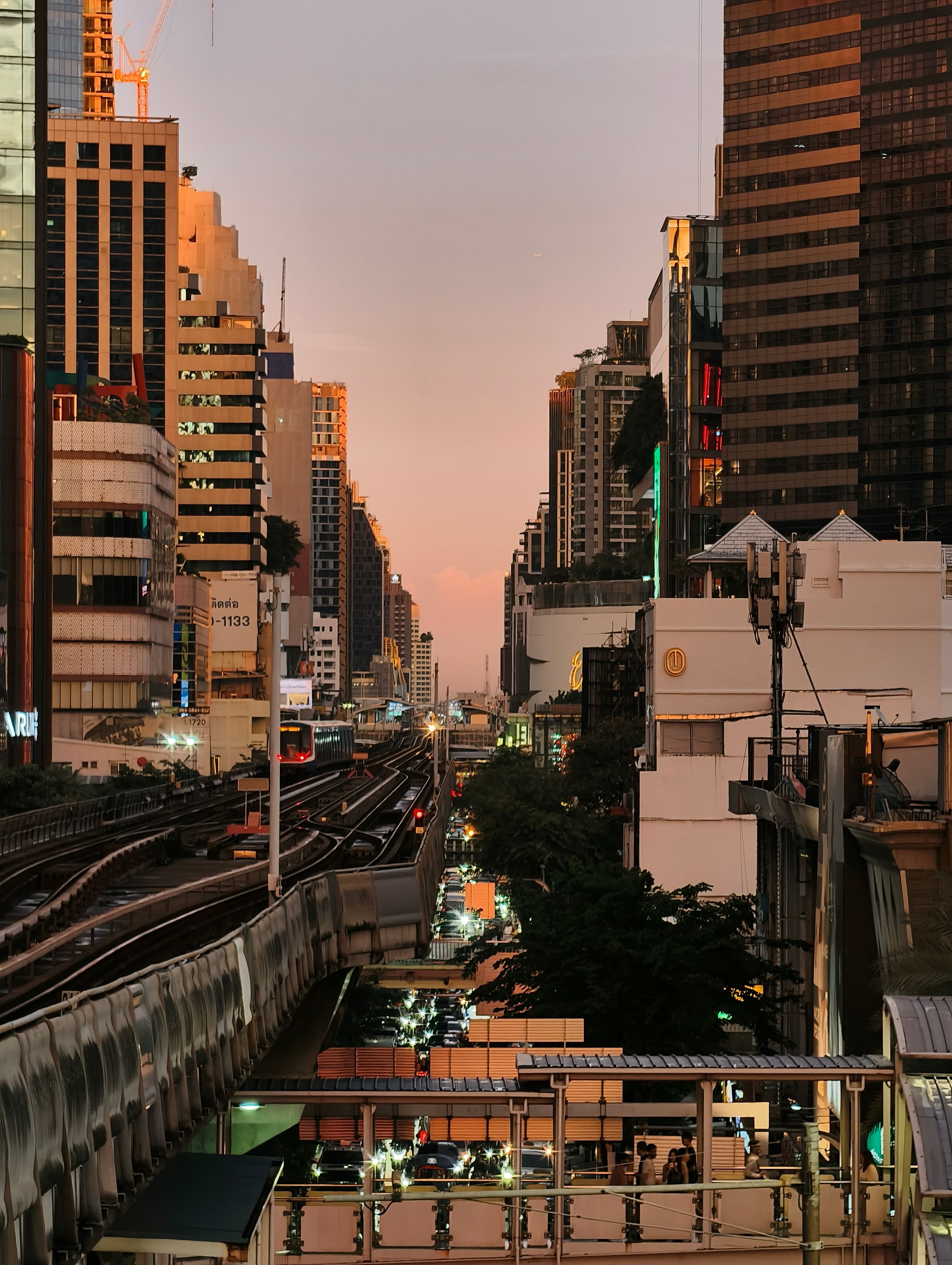
People forget Bangkok as a retirement base, which is strange, because it has the best of everything: the finest hospitals in the country, every cuisine on earth, concerts, malls, temples, and flights to anywhere. If your home will be a condo near a BTS or MRT station, you may never need a car — or want one.
Prices split wide. A modest life in an outer district can cost less than Phuket. A central condo, Western dining, and private-hospital habits can pass ฿100,000 a month without trying. Traffic, heat, and noise are the daily tax, and green space takes effort to find.
Retire here if you are a city person who withered in small towns. Healthcare alone makes it the safest choice on this list for anyone managing a serious condition — you are minutes, not hours, from world-class care.
Isan: the deep-value, real-Thailand option
Isan — the northeast — is where we chose to make our home, in Surin, so take this section as first-hand. Udon Thani and Khon Kaen are the big, practical cities; Surin is smaller and quieter. What they share is value: houses rent for a third of Phuket prices, local food is superb and cheap, and a couple can live genuinely well on ฿35,000 to ฿60,000 a month.
This is Thai family life, not expat life. Many foreigners here are married into local families. English services are the fewest on this list, the expat communities are small (Udon's is the biggest), and you will need some Thai language or a Thai partner to be fully comfortable. Healthcare in Khon Kaen and Udon is better than outsiders expect — both are regional medical centres — but the very biggest cases still go to Bangkok.
Isan is not the place to start if you have never lived in Thailand. It might be exactly the place you end up once you have.

Koh Samui, in brief
Samui is Phuket's smaller sibling: island beaches, a real hospital (Bangkok Hospital Samui), a settled expat scene, and prices closer to Phuket than to the mainland. A couple should expect ฿60,000 to ฿100,000 a month for a comfortable life. The catch is size — some love that the island is one ring road you can learn in a week; others feel they have seen it all by month three. Charming for the right person, confining for the wrong one.
The three questions that decide it
Forget the rankings. Answer these honestly:
1. What does your money have to do? If your pension is tight, the answer is Chiang Mai, Isan, or Pattaya's residential side — full stop. Choosing Phuket or Samui on a stretched budget turns paradise into arithmetic.
2. How close must serious healthcare be? Managing something real? Bangkok, or within an hour of it, moves to the top of your list. Healthy and sixty? Every town here can look after you, with Bangkok as the backstop.
3. Who will you actually spend your days with? A big expat scene (Phuket, Chiang Mai, Pattaya), a quieter settled one (Hua Hin), or Thai family and community in Isan. Choose the company first, then the town. Loneliness ends more retirements than money does.
One rule before you commit anywhere: rent a year first
Whatever town wins on paper, rent there for a full year before you buy anything or sign anything long. A year gives you the low season, the smoke, the rains, a hospital visit, and a few boring Tuesdays — the real life, not the holiday. Towns you loved for two weeks can wear thin; towns you barely noticed can grow on you.
We split our own lives between two bases because no single town had everything. You may not need two. But give your one town a full year to prove itself — Thailand rewards the patient.

No comments:
Post a Comment